


Let’s be honest: if you’re still trying to rank your small business website using a checklist from 2022, you’re basically trying to win a Formula 1 race in a horse and carriage. Search Engine Optimization (SEO) hasn’t just “changed” in the last few years—it has evolved into an entirely different species.
In 2026, Google doesn’t just want to show users a list of websites; it wants to give them the answer. Between AI Overviews (SGE), the rise of Generative Engine Optimization (GEO), and the relentless focus on real-world “Experience,” the goalposts have moved. But here’s the good news: as a small business owner, you have a secret weapon that the big, soulless AI-generated content farms don’t. You have real human experience.
At WPDPS, we’ve seen the “SEO is dead” headlines every year for a decade. Spoiler alert: it’s not dead. It’s just smarter. Here is your definitive WordPress SEO strategy for 2026 to ensure your business doesn’t just survive the AI revolution—it thrives in it.
The “Experience” Factor: Why E-E-A-T is Your Superpower
You’ve likely heard of E-A-T (Expertise, Authoritativeness, Trustworthiness). In 2026, the extra “E” for Experience is the most important letter in the alphabet.
With the internet currently flooded by “perfectly average” AI content, Google’s algorithms are desperately looking for signals of a real human behind the keyboard. They want to see that you’ve actually done the thing you’re writing about.
How to Prove Experience in 2026:
- Original Imagery: Put down the stock photos of smiling people in headsets. Use real photos of your office, your team, your tools, and your finished projects. Google’s Vision AI can tell the difference between a stock photo and a unique image of your actual work.
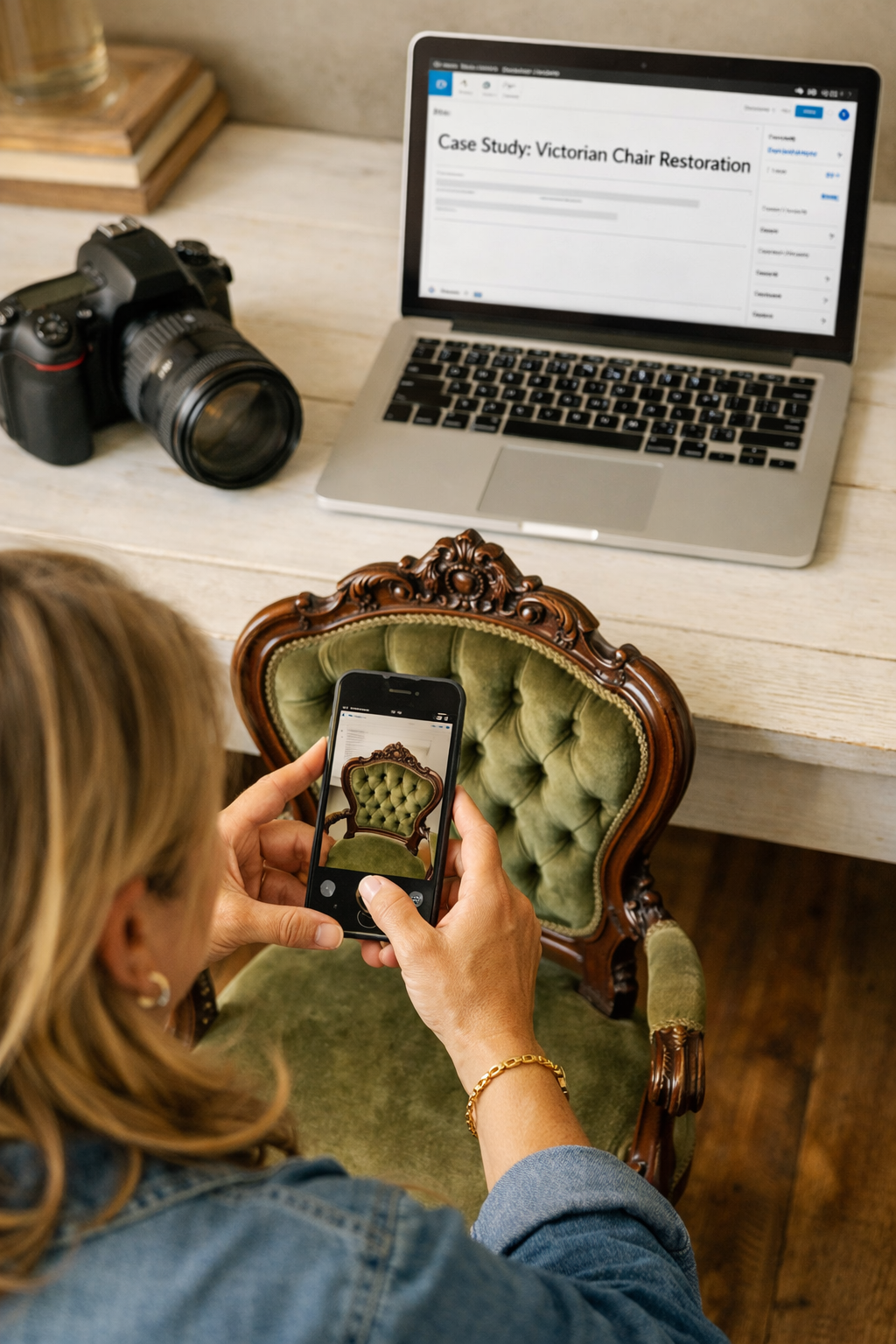
- Case Studies over “How-Tos”: Instead of a generic post on “How to Paint a Room,” write “How We Painted a Historic Victorian in Downtown [Your City] and Saved the Original Trim.” This shows Expertise and Experience.
- First-Person Narrative: Use “I” and “We.” Share your failures as well as your successes. AI doesn’t have “lessons learned”—but you do.
- Author Profiles: Every blog post should have a clear author bio linked to a detailed “About” page that showcases your credentials, years in business, and links to your social profiles.
Winning the “AI Overview” (GEO)
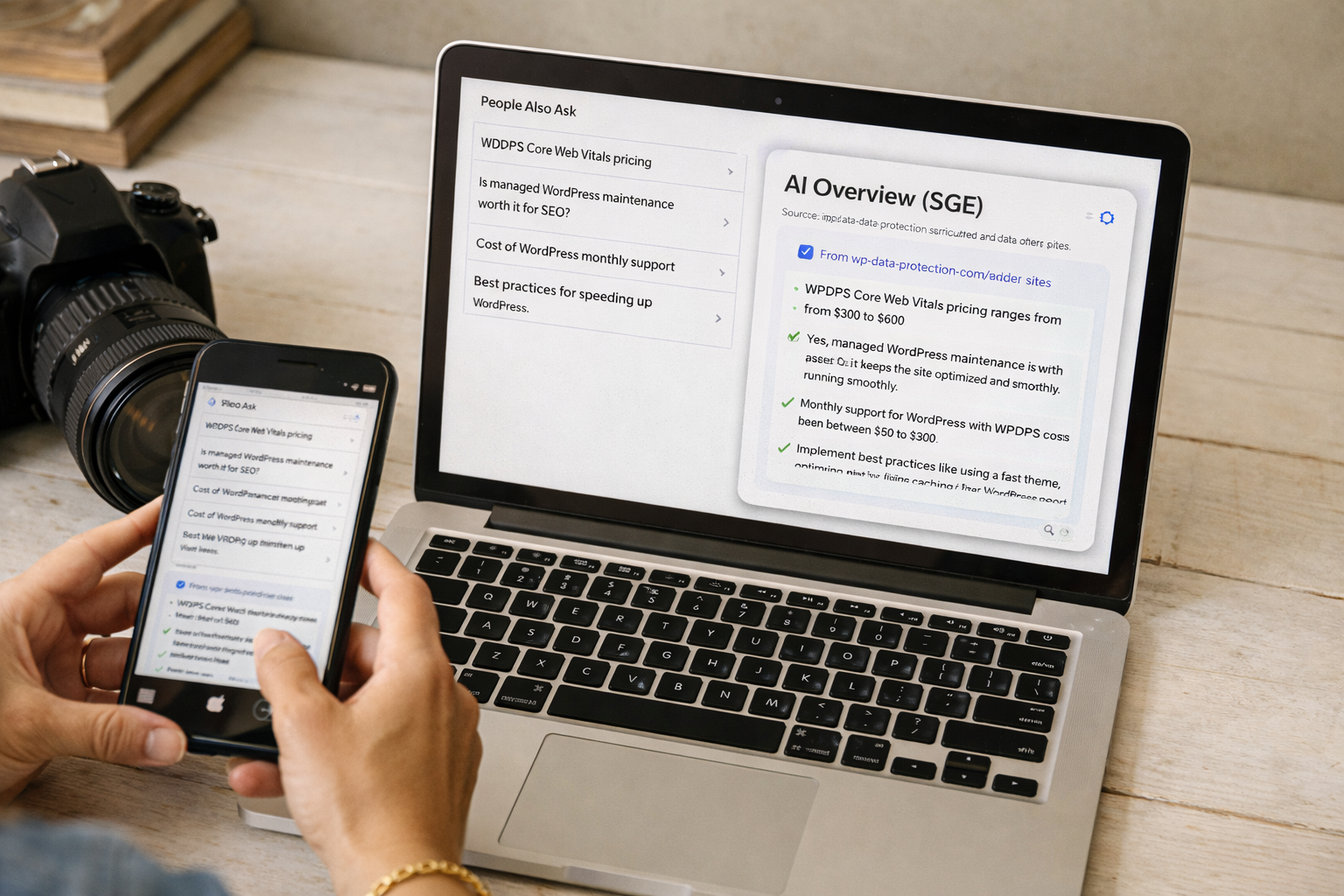
In 2026, a significant chunk of search traffic never even makes it to the traditional “blue links.” They stay at the top of the page in the AI Overview.
While some call this “zero-click search” and panic, we call it an opportunity for Generative Engine Optimization (GEO). Your goal is to be the source the AI cites to build its answer.
Strategy: The “Answer-First” Framework
Google’s AI models are looking for clear, concise, and structured data. To get cited, follow this layout for your content:
- Direct Answer: Within the first 100 words of your post, provide a 2-3 sentence direct answer to the primary question/keyword.
- Structured Lists: Use bullet points and numbered lists. AI loves lists because they are easy to parse and re-display in an overview.
- Entity-Based SEO: Stop obsessing over “keywords” and start thinking about “Entities.” If you’re a plumber, your entities are pipes, leaks, water heaters, 24/7 emergency, [City Name], and licensed. Use Schema markup (specifically
LocalBusinessandFAQschema) to tell Google exactly what entities you represent.
Technical SEO: The Need for Speed (Core Web Vitals)
If your website takes five seconds to load in 2026, you might as well have a “Closed” sign on your digital front door. Google’s Core Web Vitals are no longer a “bonus”—they are a barrier to entry. “Performance is now a foundational element of user trust.”
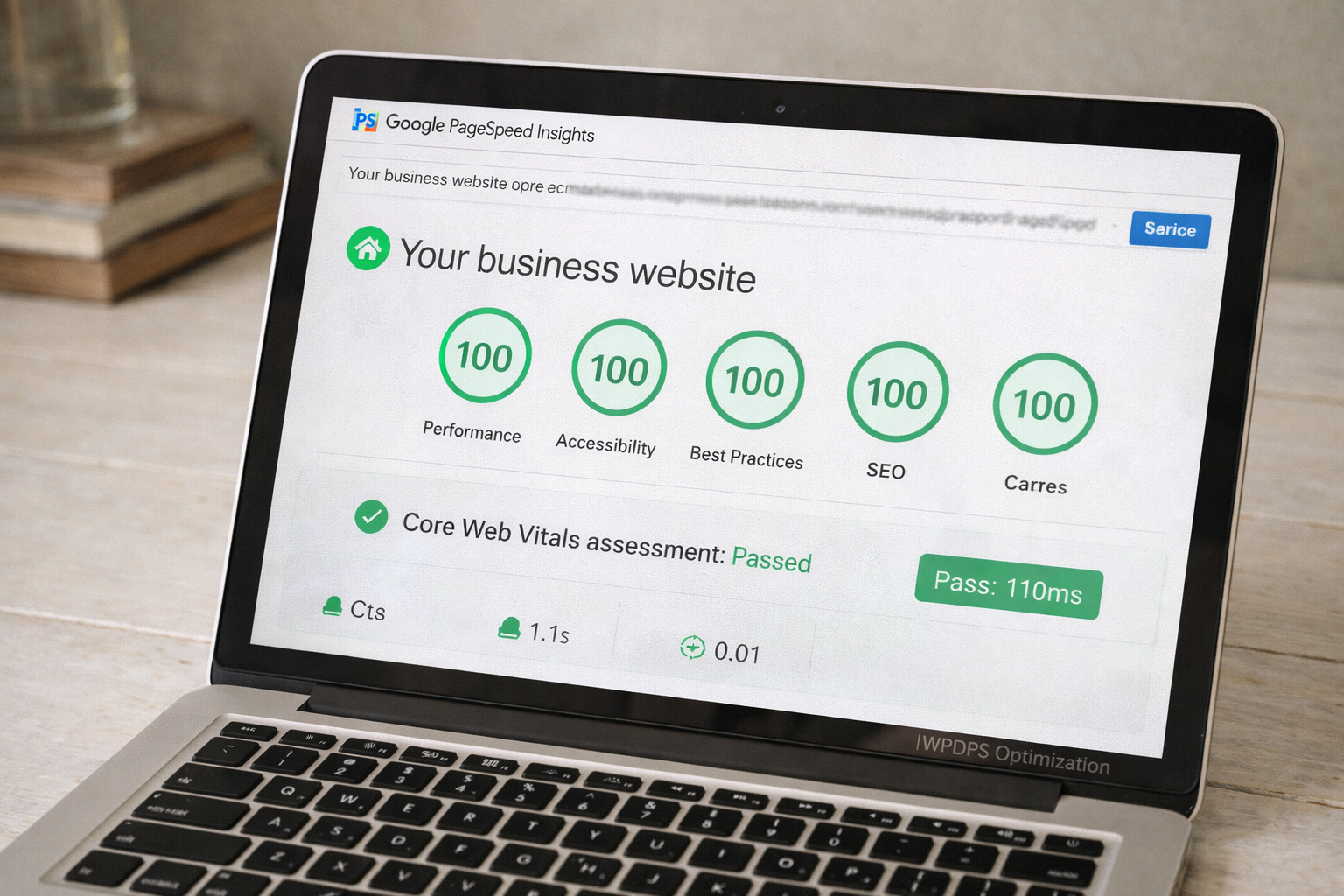
In 2026, the metric to watch is INP (Interaction to Next Paint). This replaced the old FID metric and measures how “snappy” your site feels when a user clicks something.
Why WordPress Users Often Struggle
WordPress is powerful, but it can be heavy. Bloated themes, too many plugins, and “un-optimized” hosting can tank your scores.
- LCP (Largest Contentful Paint): Your main image or text block should load in under 2.5 seconds.
- CLS (Cumulative Layout Shift): No more “jumping” buttons. Ensure your layout is stable as it loads.
- INP (Interaction to Next Paint): Your site should respond to a click in under 200 milliseconds.
The WPDPS Edge: This is where we come in. Most small business owners don’t have the time to debug a “Long Main Thread Task” or optimize “Render-Blocking JavaScript.” Our Core Web Vitals optimization service is designed to turn your “Yellow” or “Red” Search Console reports into a sea of “Green.” We handle the technical heavy lifting so you can focus on running your business.
Content Strategy: Information Gain or Bust
In the old days, you could rank by looking at the top 10 results, combining them into one “ultimate guide,” and hitting publish. In 2026, that is a recipe for invisibility. Google now prioritizes Information Gain.
Information Gain asks: Does this article add anything NEW to the conversation, or is it just a remix of what’s already out there?
3 Ways to Achieve Information Gain:
- Proprietary Data: Run a small poll with your customers. Share the results. “70% of [Your City] Homeowners Prefer X over Y.”
- The “Contrarian” Take: Don’t just follow the crowd. If everyone is saying “AI will do your taxes,” and your experience as a CPA says “Actually, here is why that’s dangerous,” write that. Unique perspectives rank.
- The Video Supplement: Embed a 60-second video of yourself explaining the core concept. Google’s “Perspectives” filter and “Video” tab are massive traffic drivers in 2026.
Local SEO in the Age of Voice and AI
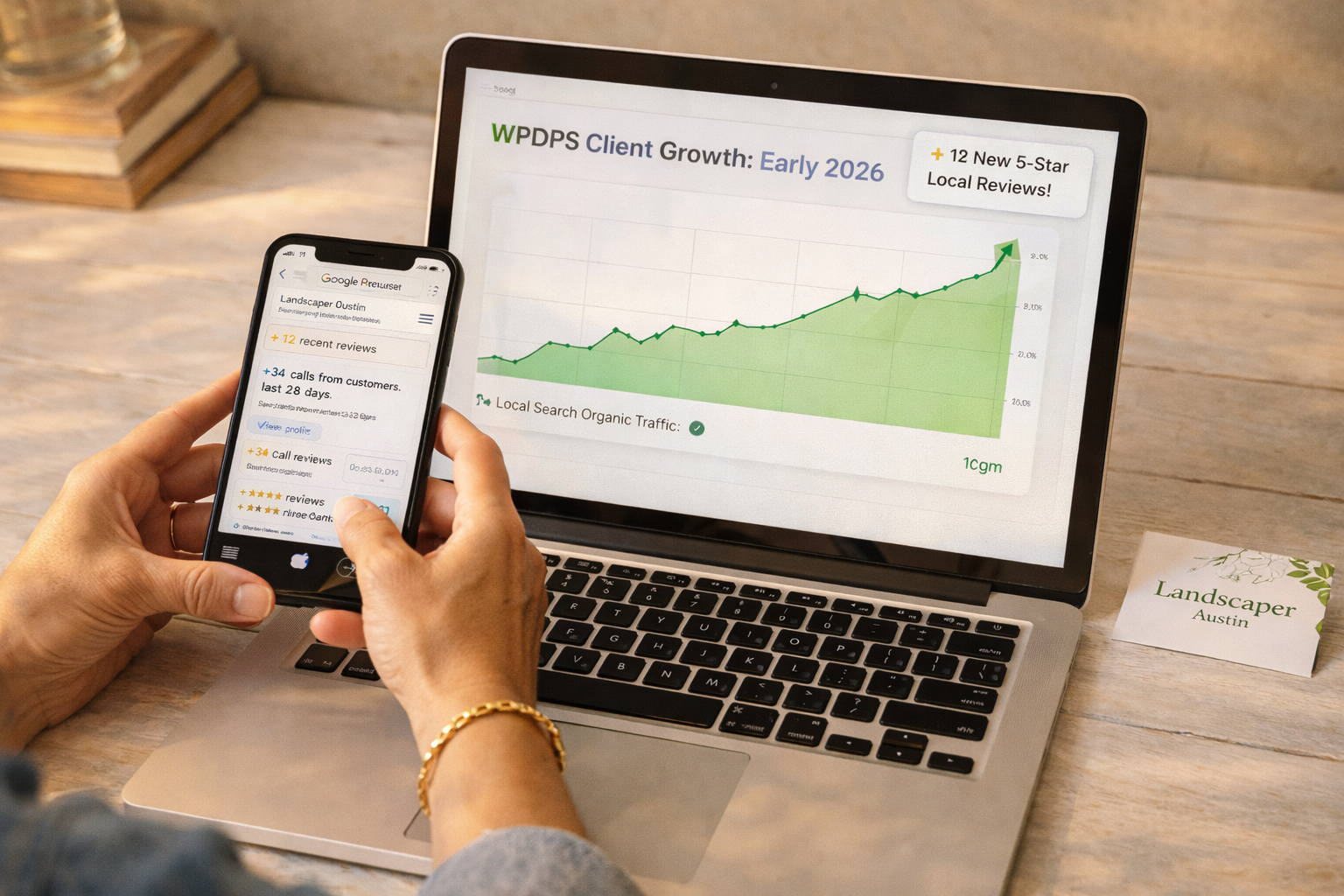
For small businesses, “Global SEO” is often a waste of money. You don’t need to rank in London if you’re a landscaper in Austin.
Local SEO in 2026 is driven by conversational queries. People aren’t typing “Plumber Austin.” They are saying to their phone, “Hey Siri, who is the best-rated plumber near me that’s open right now and handles burst pipes?”
Your Local 2026 Checklist:
- Google Business Profile (GBP): This is more important than your website for local discovery. Post updates weekly, respond to every review (even the mean ones—especially the mean ones), and upload fresh photos.
- Hyper-Local Content: Mention specific neighborhoods, local landmarks, and community events. This anchors your “Entity” to a specific geographic location.
- Review Velocity: It’s not just about having 5 stars; it’s about how recently you got them. A steady stream of new reviews tells Google’s AI that you are still active and reliable.
The “WPDPS” WordPress Tech Stack for 2026
You can have the best content in the world, but if your WordPress “engine” is leaking oil, you won’t get far. Here is the lean, mean tech stack we recommend for 2026:
| Component | Recommendation | Why? |
| Hosting | Managed WordPress Hosting | High-performance servers with server-side caching are non-negotiable for Core Web Vitals. |
| SEO Plugin | Rank Math or Yoast | Necessary for handling Schema markup and Sitemaps without manual coding. |
| Performance | WP Rocket + FlyingPress | These help with the “snappiness” (INP) that Google demands. |
| Images | WebP/AVIF Formats | Stop using JPEGs. Use modern formats and “Lazy Loading” to keep LCP low. |
| Security | Cloudflare | Not just for security, but for their global CDN and speed optimization layers. |
The “Don’ts” of 2026 SEO
To keep this guide conversational and honest, let’s talk about what will get you penalized or ignored:
- Don’t “Bulk-Publish” AI Content: If you publish 50 articles in one day using a cheap AI writer, Google will eventually flag your site as “Spammy” or “Low Value.” Use AI as a research assistant, not a ghostwriter.
- Don’t Ignore Your “Mobile-First” Indexing: Check your site on a five-year-old Android phone. If it’s slow there, it’s slow to Google.
- Don’t Buy Links: The “Backlink economy” has changed. One link from a reputable, local news site or a niche-specific blog is worth 1,000 links from “Guest Post” farms.
Summary: Your 2026 SEO To-Do List
- Audit your Core Web Vitals: If they aren’t green, get professional help.
- Focus on “Experience”: Add real photos, names, and case studies to your site.
- Optimize for “Answers”: Use lists, FAQs, and clear headings.
- Stay Local: Double down on your Google Business Profile.
SEO in 2026 isn’t about “tricking” an algorithm. It’s about proving to a very sophisticated AI that you are a real, trustworthy human who provides a great service to real people.
At WPDPS, we specialize in the “boring technical stuff”—the site speed, the security, the schema, and the maintenance—so you can focus on being the human expert your customers (and Google) are looking for.
Frequently Asked Questions
How does WPDPS help my site rank in AI Overviews?
AI search engines like Google SGE and Perplexity rely on fast, structured, and technically sound websites. WPDPS optimizes your site’s Schema Markup and Technical Architecture, ensuring that AI “bots” can easily crawl and understand your content. By improving your site’s authority and data structure, we increase the likelihood of your business being the “cited source” in AI-generated answers. “Precision in code leads to prominence in AI.”
What is included in WPDPS Core Web Vitals optimization?
We don’t just install a plugin and walk away. Our team performs a deep dive into your site’s LCP, CLS, and INP metrics. We optimize images, minify code, delay non-essential JavaScript, and ensure your server response time is lightning-fast. “Speed isn’t just about luxury; it’s a ranking requirement.”
Why should a small business choose Managed WordPress Maintenance for SEO?
SEO is not a “set it and forget it” task. WordPress, themes, and plugins require constant updates to remain secure and fast. A single broken plugin can tank your load speeds and your rankings. WPDPS provides proactive maintenance, meaning we catch performance bottlenecks before Google’s crawlers do. “Maintenance is the insurance policy for your search rankings.”
Can WPDPS fix my “Mobile-First” indexing issues?
Yes. Google primarily looks at the mobile version of your site for ranking. If your mobile experience is cluttered or slow, your desktop rankings will suffer too. We specialize in responsive design tweaks and mobile performance optimization to ensure you pass Google’s mobile usability tests with flying colors.
Do I still need an SEO strategy if I have a fast website?
Speed is the foundation, but content is the house. A fast site with poor content won’t rank, and great content on a slow site won’t be seen. WPDPS handles the “Foundation” (speed, security, and technical health) so that your “House” (content and expertise) has the best possible chance to reach the top of the search results.
How does security affect my SEO? “Google will not recommend a site it deems unsafe.” If your WordPress site is hacked or contains malware, Google will quickly remove you from search results to protect users. WPDPS includes robust security monitoring and malware removal as part of our core services, ensuring your site remains “Trusted” in the eyes of search engines.
Is INP (Interaction to Next Paint) really that important?
In 2026, yes. It is a core ranking signal. INP measures responsiveness. If a user clicks a menu and nothing happens for half a second, it creates a “poor user experience” signal. WPDPS specializes in reducing main-thread work to ensure your site feels instantaneous to every visitor. “A snappy site is a successful site.”
